Showing posts with label Old Town. Show all posts

Monday, 2 January 2017

Italy's Gallipoli

The Fortress Town


In a northern bite of the Ionian Sea are some of Italy's most perfectly formed coastal towns, and Gallipoli is one of these. Here the ocean wraps calmly around the coast in stretches of golden beach, small bays and sheltered harbours.


Fishing fleets cluster in the port area of Gallipoli and here too the occasional cruise ship may pull in to berth for the night. The sun beats down in a permanent summer glow. The outdoor cafes never close. The waterfront promenades are much used. The shops spill out onto the pavement where the rain rarely falls.


Gallipoli is a quintessential southern Italian town, steeped in history, rich in the signatures of its past. On a small island off the coast but connected to the modern city by bridge, the Old Town is perfectly captured and remains in tact. The streets twist and turn; the beaches fringe the island; the castle staunchly guards the harbour.


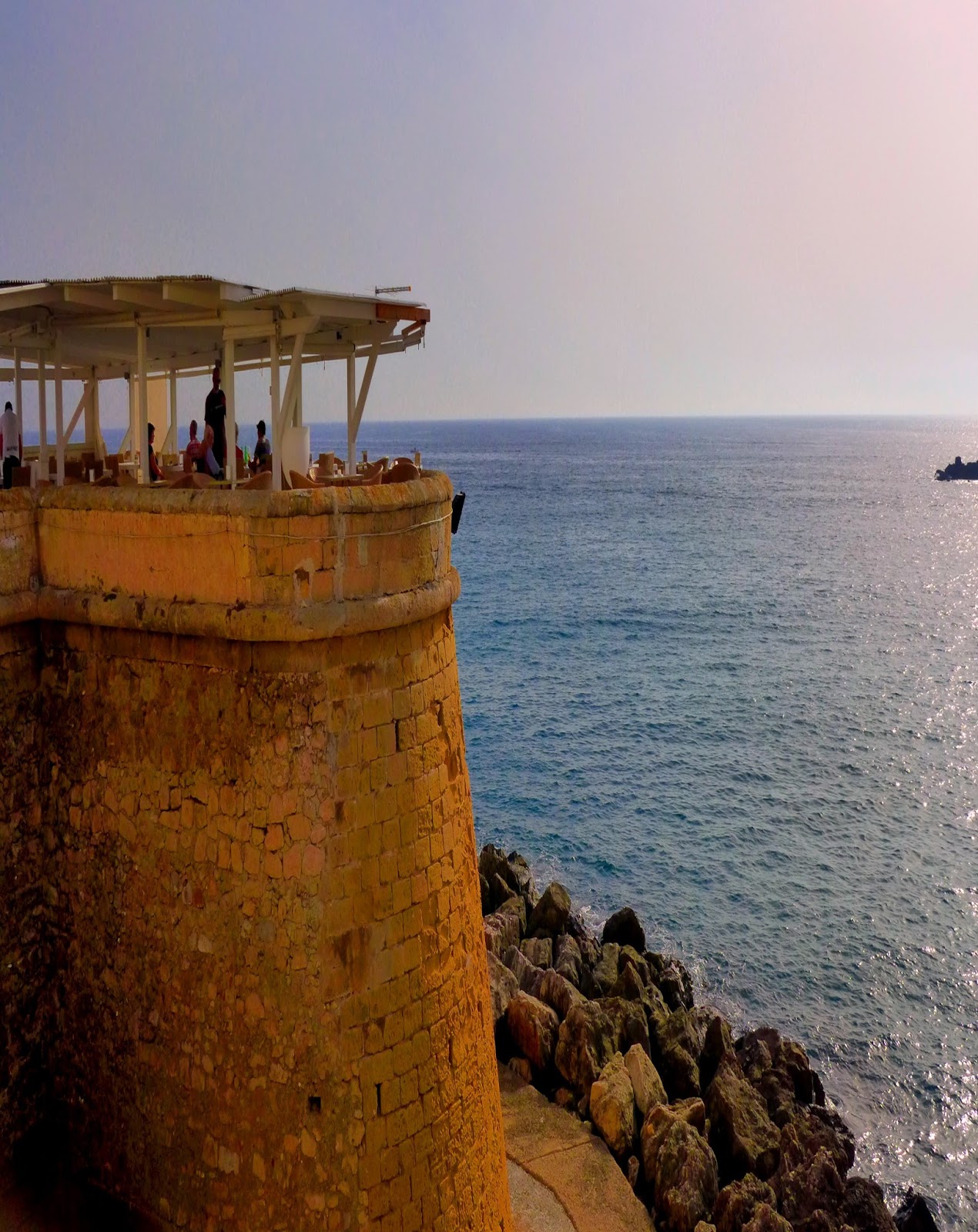
With its muscular, stocky tower walls and its impregnable frontage here is again a castle built in the Aragonese style; a style found up and down the southern Italian coast. Originally spreading out from a small Spanish kingdom the Aragonese Empire at one time ruled over large portions of southern Italy, Greece, France, and of course Spain where it originated. The polygonal walls and rounded towers are the signature of the Aragonese fortress and can be seen in a number of port towns in southern Italy.


In Gallipoli the open air cafe/bar at the top of a waterfront tower is the ideal spot to pause and enjoy the warm coastal breezes after strolling through the heart of the Old Town. Gallipoli is casual and relaxed - not part of the standard tourist trails but perhaps more appealing because of this.


In Gallipoli there are amazing Baroque facades richly carved in limestone to admire; there are yachts moored in the shadow of the castle walls; here are golden sand beaches to enjoy; there are ancient bridges, historic churches and of course the twisting maze of Old Town back streets to wander.

Gallipoli is a town with a clear separation between old and new, yet one is an easy walk to the other. It is an eminently walkable town, an eminently appealing town, and one that has surprisingly managed to slip through well below the radar of the drive to modernise and industrialise.


Also Pip McCurdy's New Zealand posts:
On Blogspot, Pip McCurdy on the Road
https://www.facebook.com/Stay-Somewhere-Strange-273777766054597/

Thursday, 22 December 2016

Taranto - a town of gritty beauty

Working the Docks

Taranto - an amazing city of industrial chimneys and factories, juxtaposed with fabulous waterways and harbours: a city of purple hazed skies and sparkling seas; a city of pleasure crafts and waterfront promenades alongside a twenty four hour port and a harbour of battleships at the ready.


Taranto has history by the handful. Its Borgo Antico is gritty, old and unadulteratedly true to its past. In fact it is lucky to have even survived its past, and its torrid role in the wars of the twentieth century. With its harbour having always been a crucial home to Italy's naval fleet this beleagured city has found itself a target in any conflict. The Borgo Antico is constricted by a boundary of seas on all sides. Here the old city survives, tattered, ragged and real. Its colours are pealing, its walls are patched and repaired. Interspersed amongst its narrow streets are the arches and the decorative lights that bring so many Italian towns to life in the dusk.


Taranto is known as the Town of Two Seas.  - Mare Grande and Mare Piccolo. Bridges link the sides of an inlet separating the seas, except when the great swing bridge is lifted to allow access to the inner harbours. The protected nature of the harbour makes it a sought after berth for the many fishing boats which trawl the Ionian Coast.

At the entry to the Mare Grande is the Aragonese Castle. This castle was used as a fort to help protect the harbour, and then also as a prison in times past. The castle may look untouched by the battles which raged, but in fact it is magnificently repaired to its former glory. Its rounded battlements, its squat walls and tiny windows present an impregnable face to the ocean.


Beautiful Taranto is the holder of one astonishing statistic -  it has been declared the most polluted city not just in Italy but also in Western Europe. This unenviable title owes its origin to the industries and in particular the steel mills which are scattered around the edges of Taranto. Although work is being done to reduce emissions and control pollution in the area, the fight is by no means won. Just one more battle in this city's long and difficult history.

Astonishingly the city remains a city of great charm and beauty. For a large city it remains compact and walkable.


Its divided parts create pockets of history, areas of intimacy and architecture unlike any other city in Italy. Its harbours, bridges and boardwalks define a multitude of quarters, each with a unique style and attraction, all against a background of tall chimneys and billowing clouds rising up into the sky.


Also Pip McCurdy's New Zealand posts:
On Blogspot, Pip McCurdy on the Road
https://www.facebook.com/Stay-Somewhere-Strange-273777766054597/

Friday, 16 December 2016

Belvedere Marittimo and the Castello del Principe

Beautiful Ruins


Castello del Principe
The Normans invaded Italy during the tenth and eleventh centuries, and made their most significant impression on the south-most of the southern states and on Sicily. Belvedere Marittimo is a small town in southern Italy, split between the beach and the steep hills behind. The beach and port edge the coast below, and the hill town above looks out over the sea, the port, and the lush surrounding countryside.

Belvedere Marittimo has an exceptional centro storico (historic centre) and in particular the most exceptional castle ruins. These dominate the hillside and create the centre around which the hill town clusters. These ruins may have existed prior, but it was their capture by Roger the Norman which gave them their current form. Overseen by their Norman conqueror, it is the remains of this Norman castle fort which towers over the hilltop town today.


Although ruins they may be, the magnificent castle that once stood there is still plain to see in the shapes and contours of the stone work that has survived.

The castle that Roger built or perhaps adapted, is one of the most attractive examples of Norman castle building that still remains in recognisable form in Italy today. And even though this castle is now only ruins the glimpses of its towers, walls and gates add grandeur and stature to the town.


Belvedere itself is intricate and curious. Its tunnels, archways and lanes weave in and out of the Old Town in a confusing array of stairways and courtyards. The hill town has no commercial centre. The shopping hub of Belvedere is below on the waterfront and this is also the commercial heart of Belvedere. On the waterfront the cafes and bars take full advantage of the water's edge promenade. Accommodation also centres on the port. The hilltop town however, is Old Town at its best.

.


 On the hilltop you will find a quieter way of life - for some perhaps, too quiet.   For others a chance to stroll slowly, to admire the perfect views across the valley, the coast and the sea; an opportunity to soak in the history, and gaze on the relics of the past.  In such an idyllic spot it is little wonder that Roger eyed up Belvedere Marittimo and decided it must be his. Now we are able to appreciate that times have moved on from the days of conquer or be conquered: The days of Roger the Norm.


Also Pip McCurdy's New Zealand posts:
On Blogspot, Pip McCurdy on the Road
https://www.facebook.com/Stay-Somewhere-Strange-273777766054597/