Showing posts with label Southern Italy. Show all posts

Friday, 24 March 2017

Trani, Southern Italy


A Safe Harbour


Sometimes history's choices may seem harsh but with time the greatest injustices may have the best results. Trani was once the most significant and prominent port on the Adriatic Sea. It was the capital of the Apulia province. It was the centre of trade and foremost in importance in its region. However times change and the neighbouring city of Bari gradually overtook Trani in prominence and stature. The result is a small city or large town which is all about its harbour, its fishing industry, its gentle pace and its waterfront with its unbeatable picturesque appeal.


In Trani you will want to stroll, to observe, to photograph. The waterfront park is a peaceful and attractive spot. The harbour is full of a mixture of pleasure crafts and fishing boats. The seafood is of course the freshest.


Each morning the waterfront comes alive as the fishing fleet returns to port. Umbrellas are raised against the rising sun - or sometimes the rain, - and the catch is sold to those who come to buy. Here you will see sole, globy, benny, pipefish - all caught in the early hours of the morning; -  the freshest of fish available to you - but more likely to the local restaurants where you will eat and enjoy.


Trani Cathedral overlooks the waterfront adding height and grandeur to the ever-changing sea front. It is a twelfth century cathedral, significant for its sensitive proportions and tall tower which overlooks the harbour and can be seen through unexpected view-shafts throughout the town.

Trani is not a place of spectacular tourism or outstanding sights, but it is a casual friendly town of manageable proportions where it is easy to simply hang out and feel very much at home. Additionally it is a town of great beauty with a harbour of exceptional drama, surrounded by buildings from multiple centuries, all gathered together to create a street-scape which is unpretentious but authentic.


Trani is not essentially a tourist town. It is a town where you can meld in with the locals and gain an understanding of daily life in small-town southern Italy as the locals go about their business. This pretty town will welcome you as you enjoy and explore the area, but do not expect a town catering to the tourist trade. Rather, expect to gradually assimilate. Given time you may be treated as a local, -  a true chance to understand the spirit of southern Italy,


Also Pip McCurdy's New Zealand posts:
On Blogspot, Pip McCurdy on the Road
https://www.facebook.com/Stay-Somewhere-Strange-273777766054597/


Saturday, 11 February 2017

Ostuni - the White City of Southern Italy


The White City


From an even plane and an ever expanding vista of green fields the white city of Ostuni rises up out of nowhere. It is just as they say, - pure and white, It flows over a tall hillside, its cathedral topping the hill in a moment of gleaming glory. It is eye catching, road-stopping, breath taking.


Ostuni is a clustered mass of pure and ancient urban architecture. It is about the forms and shapes understood hundreds, - maybe thousands - of years before tv programmes painted whole house interiors white to understand the spaces. This is organic architecture which has flowed out and over the available spaces and in a completely unselfconscious way created architecture which is memorable for all who come across it.


Inside Ostuni the sense of 'whiteness' is not so profound. The charms of Ostuni are not just about pure white architecture. They are about a town which flows and expands through arches and tunnels; through narrow streets opening to expansive plazas.; through layers of white on white. The flashes of colour in Ostuni may be subtle but they are all the more outstanding because of this. An artist who displays a handful of colourful canvasses in a small cul-de-sac of neutral walls catches the attention of all who pass by.


In Ostuni the town dwellers understand the subtle charms of their small town. Ostentation is avoided. A restaurant provides white settee seating under pure white gauze canopies. Many of the whitewashed older buildings have only the dun coloured flagstones in contrast.


Ostuni's streets are often narrow - too narrow for vehicles - made for foot traffic or for bicycles at most. These streets weave snake-like between the buildings and disappear around a corner in the distance. It is deceptively easy to get lost in Ostuni but also easy to re-find oneself, as a glimpse down the hillside to the nearby coast provides instant re-orientation.


Ostuni speaks of Mediterranean sun and summer skies. Bright clusters of bougainvillea climb up the sides of buildings. Geraniums and petunias flash from terraces and window boxes. In the plazas the time is always right for a coffee or a glass of wine under the golden sun. La Citta Bianca - the White City - is a seasonal town swelling significantly in size in the summer months.


 To enjoy the charm of Ostuni without the crowds of high summer it is late spring and early autumn that capture the White City at its best.


Also Pip McCurdy's New Zealand posts:
On Blogspot, Pip McCurdy on the Road
https://www.facebook.com/Stay-Somewhere-Strange-273777766054597/

Monday, 2 January 2017

Italy's Gallipoli

The Fortress Town


In a northern bite of the Ionian Sea are some of Italy's most perfectly formed coastal towns, and Gallipoli is one of these. Here the ocean wraps calmly around the coast in stretches of golden beach, small bays and sheltered harbours.


Fishing fleets cluster in the port area of Gallipoli and here too the occasional cruise ship may pull in to berth for the night. The sun beats down in a permanent summer glow. The outdoor cafes never close. The waterfront promenades are much used. The shops spill out onto the pavement where the rain rarely falls.


Gallipoli is a quintessential southern Italian town, steeped in history, rich in the signatures of its past. On a small island off the coast but connected to the modern city by bridge, the Old Town is perfectly captured and remains in tact. The streets twist and turn; the beaches fringe the island; the castle staunchly guards the harbour.


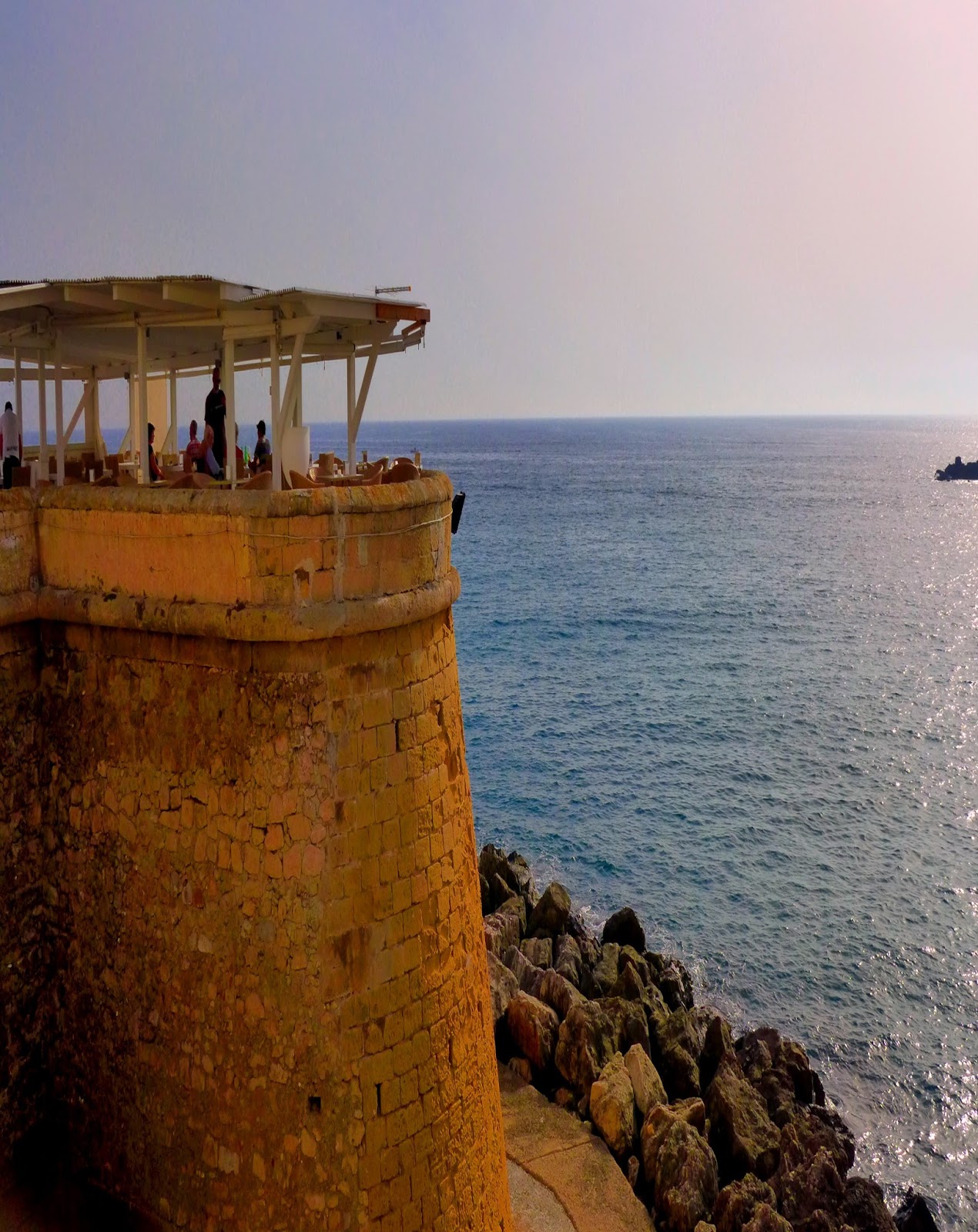
With its muscular, stocky tower walls and its impregnable frontage here is again a castle built in the Aragonese style; a style found up and down the southern Italian coast. Originally spreading out from a small Spanish kingdom the Aragonese Empire at one time ruled over large portions of southern Italy, Greece, France, and of course Spain where it originated. The polygonal walls and rounded towers are the signature of the Aragonese fortress and can be seen in a number of port towns in southern Italy.


In Gallipoli the open air cafe/bar at the top of a waterfront tower is the ideal spot to pause and enjoy the warm coastal breezes after strolling through the heart of the Old Town. Gallipoli is casual and relaxed - not part of the standard tourist trails but perhaps more appealing because of this.


In Gallipoli there are amazing Baroque facades richly carved in limestone to admire; there are yachts moored in the shadow of the castle walls; here are golden sand beaches to enjoy; there are ancient bridges, historic churches and of course the twisting maze of Old Town back streets to wander.


Gallipoli is a town with a clear separation between old and new, yet one is an easy walk to the other. It is an eminently walkable town, an eminently appealing town, and one that has surprisingly managed to slip through well below the radar of the drive to modernise and industrialise.


Also Pip McCurdy's New Zealand posts:
On Blogspot, Pip McCurdy on the Road
https://www.facebook.com/Stay-Somewhere-Strange-273777766054597/