Saturday, 4 March 2017

Apulia or Puglia - Perfect by Any Name

Ultimate Paradigm


They say that Apulia or Puglia as it is also known, is the savvy destination for the Italian tourist seeking sun, sea, beaches history, and fine Italian fare. In fact Apulia is the province with all the beauty of the more popular travel spots in Italy but without the general influx of tourists that you will find in parts of the Sorrentine Peninsula or further north on the Italian Riviera.


The seaside towns of Apulia are full of charm. Each has grown from a small fishing village to encompass a growing population and yes there are tourists, but the local culture is not overwhelmed. Each has a more hardcore city centre, but around the waterfront the old towns remain. This is a coastline of sun bleached villas and casual markets. It is a coastline where the fish are still sold as the catch comes in, and the cafes offer the freshest of fare. Small tables are clustered outside these cafes and the locals sip their coffee or their wine. The roads are often quiet and the sun warms the air.


In Polignano a Mare the high cliffs tower over the white sand beaches. On top of the cliffs the rectangular white walls of the houses with their roof top terraces, look out onto the Adriatic and beyond. Numbers of caves dot the cliffs, worn and eroded by the waves. In one of those caves an enterprising hotel has made the most of the opportunities of the area and you are able to dine in this restaurant -in-a- cave with tables facing out over the waves washing up the cliff face below. In Torre a Mare the small town is dominated by its sixteenth century tower. This iconic small town is a favourite holiday destination for native Italians, as close as it is to the region's premium town and departure point of Bari.


Monopoli -  a little to the north of Bari - is gritty and industrial in its newer area, but there is an azure blue sea, a sparkling beach and a sheltered boat harbour where you will see the bright colours of the fishing fleet drifting lazily at anchor, reflecting off the water, and the white washed walls of the town glistening in the sun. The Old Town is pristine and spotless, Monopoli takes pride in its colourful hanging pots and planters where the flowering vines tumble down in prolific confusion.

Dotted around the Apulia region the occasional Trulli still persists - usually a single conicle outpost standing alone on the edge of a field. As the road weaves north the Trulli are eventually left behind - unique to one small region of Italy.


Also Pip McCurdy's New Zealand posts:
On Blogspot, Pip McCurdy on the Road
https://www.facebook.com/Stay-Somewhere-Strange-273777766054597/

Friday, 24 February 2017

The Trulli of Alberobello, Southern Italy


Amongst the Trulli

Like so many noddy houses the Trulli begin to appear as the roads wind into the countryside around Alberobello. This is the Itria Valley area of Apulia in the south east region of southern Italy. Here the countryside is rolling and green.


Trulli are the most unique of homes - as unique as you will see anywhere in Italy, maybe in Europe. These small homes are sometimes grey-toned the colour of concrete, and sometimes whitewashed in the purest of white on white. The roofs are sometimes concrete topped, but more often they are a mound of stacked shingles in their various earthen colours. Dark toned wooden doors and small shuttered windows make these singular dwellings as similar as peas in a pod. In the countryside the Trulli are sometimes single, but more often clustered in groups of three or four. The countryside is dotted with these. From vantage points looking out across the Itria Valley there are hundreds, perhaps thousands of these small humped roofs visible.

Alberobello is the heart of Trulli country. The prettiest of towns in itself, the Trulli quarter is completely unique to Alberobello. It is as surprising as a traditional African village might be in the middle of a city. The Trulli cluster up a low hillside, roofs rising one above the other. Small lanes of flagstones weave in between the Trulli. Tourists are drawn like magnets to this enclave and many of the Trulli have been converted inside to small shops and homestays. On the interior the spaces may be compact but are still full of charm.


In the summer the minimal windows mean that the interiors with their thick plastered walls, remain cool and agreeable. In the high dome roofs there is usually a mezzanine platform reached by a tall ladder. The platform was the sleeping space in the traditional Trulli home. The larger Trulli were built close together with one merging into the other to create extended more usable family living spaces. Often there were traditional Mediterranean flat roofed homes built around Trulli, with the domed roofs poking through the flat surrounds to provide the distinctive conical cap. Many of these still survive in the fields surrounding Alberobello.


Originally Trulli were built as animal shelters, grain stores and peasant homes. Increasingly abandoned in the late twentieth century it was only essentially tourism which saved the Trulli from destruction. Today Trulli are refurbished for visitors to the region and for business, but few are still lived in as homes of choice by the locals. Now under the protection of Unesco as a World Heritage Site, the Trulli village of Alberobello is thriving once more. In the surrounding villages of Locorotondo and Martina Franca many clusters of Trulli also remain.


Across the fields on the roads leading out of the region Trulli become more and more scattered, some in varying stages of abandonment and disrepair. Others are still well looked after. And then as fast as they began to appear in the countryside, they disappear as you leave this distinctive region of southern Italy behind.


Also Pip McCurdy's New Zealand posts:
On Blogspot, Pip McCurdy on the Road
https://www.facebook.com/Stay-Somewhere-Strange-273777766054597/

Friday, 17 February 2017

Italy's Sorrentine Peninsula and Torre Santa Sabina

Italy's Untamed East Coast

Take the time to travel up Italy's east coast and the Sorrentine Peninsula and you will realise that here it is the sea that rules. The towns and villages - as small as they are - which dot this coast, are there at the forbearance of the ocean; sometimes gentle and sometimes ferocious. There is no escape when the sea becomes angry and churns like a wild beast.

So many moods; sometimes soft and gentle with golden sands and lapping ripples, at other times moody and uneasily threatening


- ready to turn, ready to pounce. The surface heaves with a suppressed power yet scarcely a ripple breaks the taut surface.


Along the coast the shore dwellers thrive yet also suffer from the moods of the coast.


Everyone loves the sea. Tourists and holiday-makers flock to the summer seaside.


Restaurants flourish and hotels overflow. Yet in winter also, these coast dwellers must find ways to survive.

A beautiful spot such as Torre Santa Sabina has its history to fall back on. Impregnable watch towers guard the harbour and the coast as they have done for centuries. Once the beacon lights were lit on these towers to relay warnings along the coast of an approaching invasion. Today the only thing that these watchtowers still stand guard over is usually a small harbour fleet of fishing boats waiting for a favourable turn in the weather.


Brindisi - the jumping off point to the Aegean Sea and the Greek towns and islands, -  is little more than an embarkation point to many. Yet go north, go south ... there is so much to fall in love with. This east coast of Italy  -  facing out towards Albania - is sparsely populated and rugged. The settlements are small and unspoiled. Tourists are accepted but not a priority. Along such a beautiful stretch of coast this is bound to change. Already the population swells in tens of thousands during the weeks of high summer. However the dramatic beauty of this coast in winter has its own simmering appeal. It is this magnetic attraction to the sea in all its moods which ties the locals to their precarious coastal existence.


Apulia - or Puglia, another name for the same region -  is an area of small towns, rocky cliffs, sheltered bays and coves. It is historic and it is modern. It is the area of Italy to go to if you want to mingle with the locals as you dine on the freshest of fish and enjoy a limoncello. In the eighth century BC the first signs of inhabitants were recorded. These were the ancient Greeks, and they knew what they were doing.


Also Pip McCurdy's New Zealand posts:
On Blogspot, Pip McCurdy on the Road
https://www.facebook.com/Stay-Somewhere-Strange-273777766054597/

Saturday, 11 February 2017

Ostuni - the White City of Southern Italy


The White City


From an even plane and an ever expanding vista of green fields the white city of Ostuni rises up out of nowhere. It is just as they say, - pure and white, It flows over a tall hillside, its cathedral topping the hill in a moment of gleaming glory. It is eye catching, road-stopping, breath taking.


Ostuni is a clustered mass of pure and ancient urban architecture. It is about the forms and shapes understood hundreds, - maybe thousands - of years before tv programmes painted whole house interiors white to understand the spaces. This is organic architecture which has flowed out and over the available spaces and in a completely unselfconscious way created architecture which is memorable for all who come across it.


Inside Ostuni the sense of 'whiteness' is not so profound. The charms of Ostuni are not just about pure white architecture. They are about a town which flows and expands through arches and tunnels; through narrow streets opening to expansive plazas.; through layers of white on white. The flashes of colour in Ostuni may be subtle but they are all the more outstanding because of this. An artist who displays a handful of colourful canvasses in a small cul-de-sac of neutral walls catches the attention of all who pass by.


In Ostuni the town dwellers understand the subtle charms of their small town. Ostentation is avoided. A restaurant provides white settee seating under pure white gauze canopies. Many of the whitewashed older buildings have only the dun coloured flagstones in contrast.


Ostuni's streets are often narrow - too narrow for vehicles - made for foot traffic or for bicycles at most. These streets weave snake-like between the buildings and disappear around a corner in the distance. It is deceptively easy to get lost in Ostuni but also easy to re-find oneself, as a glimpse down the hillside to the nearby coast provides instant re-orientation.


Ostuni speaks of Mediterranean sun and summer skies. Bright clusters of bougainvillea climb up the sides of buildings. Geraniums and petunias flash from terraces and window boxes. In the plazas the time is always right for a coffee or a glass of wine under the golden sun. La Citta Bianca - the White City - is a seasonal town swelling significantly in size in the summer months.


 To enjoy the charm of Ostuni without the crowds of high summer it is late spring and early autumn that capture the White City at its best.


Also Pip McCurdy's New Zealand posts:
On Blogspot, Pip McCurdy on the Road
https://www.facebook.com/Stay-Somewhere-Strange-273777766054597/

Saturday, 4 February 2017

The Unesco protected city of Lecce, Southern Italy

Lecce -  Where History Comes Alive


As you travel up the eastern coast of Italy the stunningly beautiful coastal towns glide by, enticing you to stop and enjoy these idyllic coastal resorts. However it is not just the coast which is awe-inspiring. Inland you will find the city of Lecce - an exceptional city; a living museum. The town of Lecce -  capital of Apulio - is steeped in history; the excavations of parts of the Old Town are ongoing and a permanent fixture which the locals accommodate in the midst of their community. The second century Roman ampitheatre has been partially unburried - enough to be used for events today, even though it is at least eighteen centuries old. This ampitheatre sits in the heart of one of Lecce's busy squares. Traffic and pedestrians make their way around it as the dig goes on.


The essence of Lecce is in its history and in the great beauty of the many carved buildings still in use in the town today. The historic buildings of Lecce are recognisable for their soft warm glow. These buildings are carved from rich coloured sandstone called Lecce stone, which is imminently workable. As a product of their building materials, the churches, towers and palaces of Lecce are richly carved and decorated. Their facades are intricate and modulated, Their striking frontages may be weathered and pitted but they retain their integrity and are essentially unharmed by time. Building after building shows this same strikingly intricate frontage to the streets and squares. It is an architectural heritage that must be the envy of most other cities and towns in Italy. It is in fact, sometimes referred to as the Florence of the South.


Lecce remains a city of great dignity. Tourists come through the city gates in small groups, but there is a respectful hush as they make their way through the streets and piazzas. Perhaps there is a touch of awe at the magnificence of these buildings. Lecce has risen above the temptation to become a highly commercial tourist town, even though it has much to lure in the tourists, with so much living history within the city walls. Lecce is not a town for trinkets and souvenir shops. It is a town of art, of bookshops, of cathedrals and museums. It is a serious town surrounded by its more frivolous neighbours.


The Baroque period is where Lecce put on the mantle of its present day character. During the seventeenth and eighteenth centuries many of its current


buildings were first erected, and many of its older buildings were given a Baroque-style face-lift. Because of the consistency of the Baroque style that pervades much of the Old Town, Lecce is now on the nomination list for preservation as a UNESCO World Heritage site. A final decision has not yet been made,


Also Pip McCurdy's New Zealand posts:
On Blogspot, Pip McCurdy on the Road
https://www.facebook.com/Stay-Somewhere-Strange-273777766054597/

Friday, 13 January 2017

Otranto and its unique Cathedral in southern Italy

In Memory of the Martyrs


On a coast of glorious beaches, numerous solidly defensive castles, all day sun, turquoise blue seas and endless mellow walls of cream and gold, there lies Otranto. This is the town that resisted invaders and fought for its survival. This is the town where the martyrs died and this is the town where the ossuary displaying the bones of the martyrs can be found.


The Cathedral of Otranto is a sombre place. It is a place to gaze upon the bones of those who fought for Otranto's survival, and to think back on the sacrifices that were made. It is because of these persons - now so gruesomely displayed - that Otranto stands as a proud and independent town today. Did these fighters save Otranto and preserve it for future generations? This is not an easy question but one can be certain that this is what those who died believed. They were fighting for the preservation of the town and the life and country that they loved.


The siege of Otranto took place in the fifteenth century. It was the last attempt by an Ottoman force to conquer southern Italy. The legend is that the 813 martyrs were those who refused to convert to the religion of the invaders and were therefore slaughtered. Whilst like all legends there are some questions as to the facts, it is clear that many did die and their bones were preserved. The Ottomans after less than a year failed to receive reinforcements and retreated. The Siege of Otranto was over. Perhaps the 813 who died did make a difference.


The cellar under the Cathedral of Otranto is an array of graceful columns and soaring arches supporting the nave above. It is a play of light and shade, a graceful and impressive crypt that invokes a sense of hushed awe. Above, in the heart of the cathedral is an intricate tiled floor and a magnificent tessellated  mosaic ceiling, both telling encrypted stories of the mysterious past. At the altar the candles stand tall, the marble surfaces retreat in layered tiers to the cross and a pensive statue of Mary. Behind this altar are three tall cases built into the walls of the cathedral, each filled with the bones of the martyrs. Grim and unforgettable, these are the relics that tell the tale which makes Otranto so notable, These are the bones of those who died. This is what is left.


Also Pip McCurdy's New Zealand posts:
On Blogspot, Pip McCurdy on the Road
https://www.facebook.com/Stay-Somewhere-Strange-273777766054597/

Monday, 2 January 2017

Italy's Gallipoli

The Fortress Town


In a northern bite of the Ionian Sea are some of Italy's most perfectly formed coastal towns, and Gallipoli is one of these. Here the ocean wraps calmly around the coast in stretches of golden beach, small bays and sheltered harbours.


Fishing fleets cluster in the port area of Gallipoli and here too the occasional cruise ship may pull in to berth for the night. The sun beats down in a permanent summer glow. The outdoor cafes never close. The waterfront promenades are much used. The shops spill out onto the pavement where the rain rarely falls.


Gallipoli is a quintessential southern Italian town, steeped in history, rich in the signatures of its past. On a small island off the coast but connected to the modern city by bridge, the Old Town is perfectly captured and remains in tact. The streets twist and turn; the beaches fringe the island; the castle staunchly guards the harbour.


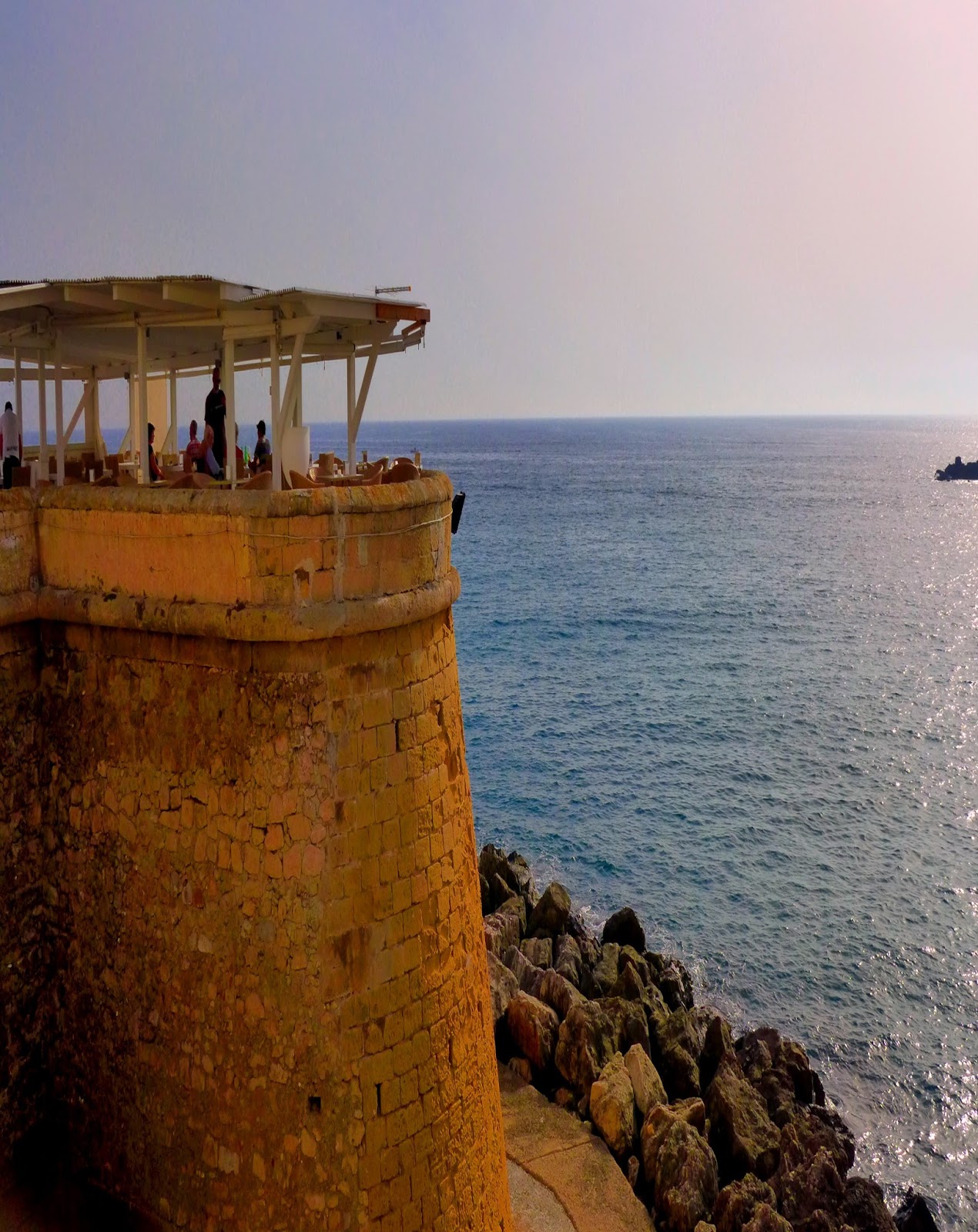
With its muscular, stocky tower walls and its impregnable frontage here is again a castle built in the Aragonese style; a style found up and down the southern Italian coast. Originally spreading out from a small Spanish kingdom the Aragonese Empire at one time ruled over large portions of southern Italy, Greece, France, and of course Spain where it originated. The polygonal walls and rounded towers are the signature of the Aragonese fortress and can be seen in a number of port towns in southern Italy.


In Gallipoli the open air cafe/bar at the top of a waterfront tower is the ideal spot to pause and enjoy the warm coastal breezes after strolling through the heart of the Old Town. Gallipoli is casual and relaxed - not part of the standard tourist trails but perhaps more appealing because of this.


In Gallipoli there are amazing Baroque facades richly carved in limestone to admire; there are yachts moored in the shadow of the castle walls; here are golden sand beaches to enjoy; there are ancient bridges, historic churches and of course the twisting maze of Old Town back streets to wander.


Gallipoli is a town with a clear separation between old and new, yet one is an easy walk to the other. It is an eminently walkable town, an eminently appealing town, and one that has surprisingly managed to slip through well below the radar of the drive to modernise and industrialise.


Also Pip McCurdy's New Zealand posts:
On Blogspot, Pip McCurdy on the Road
https://www.facebook.com/Stay-Somewhere-Strange-273777766054597/