Friday, 13 January 2017

Otranto and its unique Cathedral in southern Italy

In Memory of the Martyrs


On a coast of glorious beaches, numerous solidly defensive castles, all day sun, turquoise blue seas and endless mellow walls of cream and gold, there lies Otranto. This is the town that resisted invaders and fought for its survival. This is the town where the martyrs died and this is the town where the ossuary displaying the bones of the martyrs can be found.


The Cathedral of Otranto is a sombre place. It is a place to gaze upon the bones of those who fought for Otranto's survival, and to think back on the sacrifices that were made. It is because of these persons - now so gruesomely displayed - that Otranto stands as a proud and independent town today. Did these fighters save Otranto and preserve it for future generations? This is not an easy question but one can be certain that this is what those who died believed. They were fighting for the preservation of the town and the life and country that they loved.


The siege of Otranto took place in the fifteenth century. It was the last attempt by an Ottoman force to conquer southern Italy. The legend is that the 813 martyrs were those who refused to convert to the religion of the invaders and were therefore slaughtered. Whilst like all legends there are some questions as to the facts, it is clear that many did die and their bones were preserved. The Ottomans after less than a year failed to receive reinforcements and retreated. The Siege of Otranto was over. Perhaps the 813 who died did make a difference.


The cellar under the Cathedral of Otranto is an array of graceful columns and soaring arches supporting the nave above. It is a play of light and shade, a graceful and impressive crypt that invokes a sense of hushed awe. Above, in the heart of the cathedral is an intricate tiled floor and a magnificent tessellated  mosaic ceiling, both telling encrypted stories of the mysterious past. At the altar the candles stand tall, the marble surfaces retreat in layered tiers to the cross and a pensive statue of Mary. Behind this altar are three tall cases built into the walls of the cathedral, each filled with the bones of the martyrs. Grim and unforgettable, these are the relics that tell the tale which makes Otranto so notable, These are the bones of those who died. This is what is left.


Also Pip McCurdy's New Zealand posts:
On Blogspot, Pip McCurdy on the Road
https://www.facebook.com/Stay-Somewhere-Strange-273777766054597/

Monday, 2 January 2017

Italy's Gallipoli

The Fortress Town


In a northern bite of the Ionian Sea are some of Italy's most perfectly formed coastal towns, and Gallipoli is one of these. Here the ocean wraps calmly around the coast in stretches of golden beach, small bays and sheltered harbours.


Fishing fleets cluster in the port area of Gallipoli and here too the occasional cruise ship may pull in to berth for the night. The sun beats down in a permanent summer glow. The outdoor cafes never close. The waterfront promenades are much used. The shops spill out onto the pavement where the rain rarely falls.


Gallipoli is a quintessential southern Italian town, steeped in history, rich in the signatures of its past. On a small island off the coast but connected to the modern city by bridge, the Old Town is perfectly captured and remains in tact. The streets twist and turn; the beaches fringe the island; the castle staunchly guards the harbour.


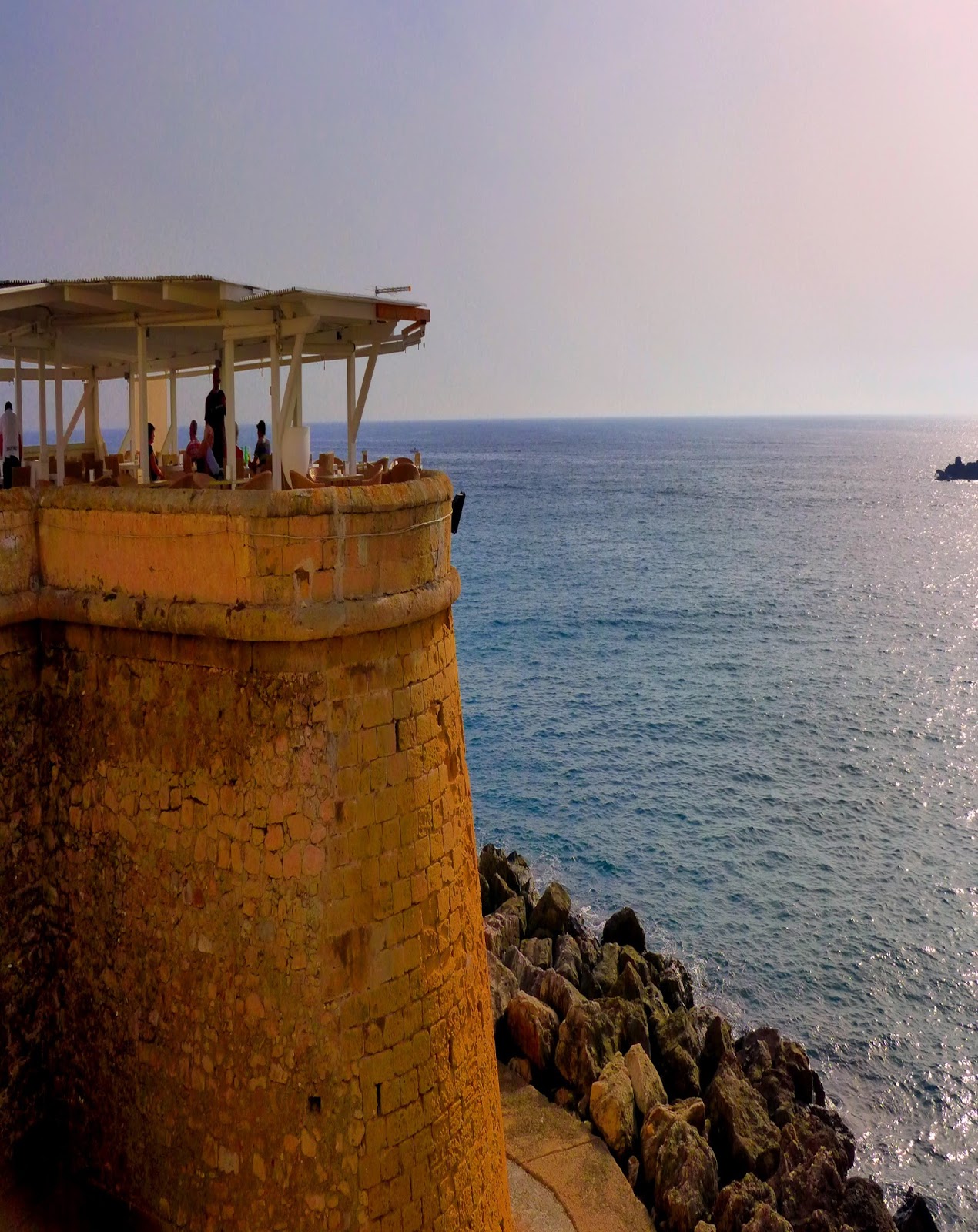
With its muscular, stocky tower walls and its impregnable frontage here is again a castle built in the Aragonese style; a style found up and down the southern Italian coast. Originally spreading out from a small Spanish kingdom the Aragonese Empire at one time ruled over large portions of southern Italy, Greece, France, and of course Spain where it originated. The polygonal walls and rounded towers are the signature of the Aragonese fortress and can be seen in a number of port towns in southern Italy.


In Gallipoli the open air cafe/bar at the top of a waterfront tower is the ideal spot to pause and enjoy the warm coastal breezes after strolling through the heart of the Old Town. Gallipoli is casual and relaxed - not part of the standard tourist trails but perhaps more appealing because of this.


In Gallipoli there are amazing Baroque facades richly carved in limestone to admire; there are yachts moored in the shadow of the castle walls; here are golden sand beaches to enjoy; there are ancient bridges, historic churches and of course the twisting maze of Old Town back streets to wander.


Gallipoli is a town with a clear separation between old and new, yet one is an easy walk to the other. It is an eminently walkable town, an eminently appealing town, and one that has surprisingly managed to slip through well below the radar of the drive to modernise and industrialise.


Also Pip McCurdy's New Zealand posts:
On Blogspot, Pip McCurdy on the Road
https://www.facebook.com/Stay-Somewhere-Strange-273777766054597/

Thursday, 22 December 2016

Taranto - a town of gritty beauty

Working the Docks

Taranto - an amazing city of industrial chimneys and factories, juxtaposed with fabulous waterways and harbours: a city of purple hazed skies and sparkling seas; a city of pleasure crafts and waterfront promenades alongside a twenty four hour port and a harbour of battleships at the ready.


Taranto has history by the handful. Its Borgo Antico is gritty, old and unadulteratedly true to its past. In fact it is lucky to have even survived its past, and its torrid role in the wars of the twentieth century. With its harbour having always been a crucial home to Italy's naval fleet this beleagured city has found itself a target in any conflict. The Borgo Antico is constricted by a boundary of seas on all sides. Here the old city survives, tattered, ragged and real. Its colours are pealing, its walls are patched and repaired. Interspersed amongst its narrow streets are the arches and the decorative lights that bring so many Italian towns to life in the dusk.


Taranto is known as the Town of Two Seas.  - Mare Grande and Mare Piccolo. Bridges link the sides of an inlet separating the seas, except when the great swing bridge is lifted to allow access to the inner harbours. The protected nature of the harbour makes it a sought after berth for the many fishing boats which trawl the Ionian Coast.

At the entry to the Mare Grande is the Aragonese Castle. This castle was used as a fort to help protect the harbour, and then also as a prison in times past. The castle may look untouched by the battles which raged, but in fact it is magnificently repaired to its former glory. Its rounded battlements, its squat walls and tiny windows present an impregnable face to the ocean.


Beautiful Taranto is the holder of one astonishing statistic -  it has been declared the most polluted city not just in Italy but also in Western Europe. This unenviable title owes its origin to the industries and in particular the steel mills which are scattered around the edges of Taranto. Although work is being done to reduce emissions and control pollution in the area, the fight is by no means won. Just one more battle in this city's long and difficult history.

Astonishingly the city remains a city of great charm and beauty. For a large city it remains compact and walkable.


Its divided parts create pockets of history, areas of intimacy and architecture unlike any other city in Italy. Its harbours, bridges and boardwalks define a multitude of quarters, each with a unique style and attraction, all against a background of tall chimneys and billowing clouds rising up into the sky.


Also Pip McCurdy's New Zealand posts:
On Blogspot, Pip McCurdy on the Road
https://www.facebook.com/Stay-Somewhere-Strange-273777766054597/

Friday, 16 December 2016

Belvedere Marittimo and the Castello del Principe

Beautiful Ruins


Castello del Principe
The Normans invaded Italy during the tenth and eleventh centuries, and made their most significant impression on the south-most of the southern states and on Sicily. Belvedere Marittimo is a small town in southern Italy, split between the beach and the steep hills behind. The beach and port edge the coast below, and the hill town above looks out over the sea, the port, and the lush surrounding countryside.

Belvedere Marittimo has an exceptional centro storico (historic centre) and in particular the most exceptional castle ruins. These dominate the hillside and create the centre around which the hill town clusters. These ruins may have existed prior, but it was their capture by Roger the Norman which gave them their current form. Overseen by their Norman conqueror, it is the remains of this Norman castle fort which towers over the hilltop town today.


Although ruins they may be, the magnificent castle that once stood there is still plain to see in the shapes and contours of the stone work that has survived.

The castle that Roger built or perhaps adapted, is one of the most attractive examples of Norman castle building that still remains in recognisable form in Italy today. And even though this castle is now only ruins the glimpses of its towers, walls and gates add grandeur and stature to the town.


Belvedere itself is intricate and curious. Its tunnels, archways and lanes weave in and out of the Old Town in a confusing array of stairways and courtyards. The hill town has no commercial centre. The shopping hub of Belvedere is below on the waterfront and this is also the commercial heart of Belvedere. On the waterfront the cafes and bars take full advantage of the water's edge promenade. Accommodation also centres on the port. The hilltop town however, is Old Town at its best.

.


 On the hilltop you will find a quieter way of life - for some perhaps, too quiet.   For others a chance to stroll slowly, to admire the perfect views across the valley, the coast and the sea; an opportunity to soak in the history, and gaze on the relics of the past.  In such an idyllic spot it is little wonder that Roger eyed up Belvedere Marittimo and decided it must be his. Now we are able to appreciate that times have moved on from the days of conquer or be conquered: The days of Roger the Norm.


Also Pip McCurdy's New Zealand posts:
On Blogspot, Pip McCurdy on the Road
https://www.facebook.com/Stay-Somewhere-Strange-273777766054597/

Saturday, 3 December 2016

Diamante - A True Italian Jewel

The Diamante Diamond


Jutting out on a promontory in the Mediterranean is the town of Diamante, a small town with a mountain of initiative as it strives to make its presence felt alongside those famous names in the south of Italy ; -  you know them all -  Palermo, Tropea, Marsala .... Diamante calls on all its skills to make its mark amongst its illustrious neighbours  as it promotes its festivals and its points of distinction. Yet this is a town with character and charm in its own right, with its kilometres of relaxed beaches and its warmly coloured buildings steeped in history. It is a town whose charms are often overlooked.


In Diamante you will find yourself in a town which is all about the art.  The exterior walls of the houses that line the cobbled streets are punctuated with frescoes and murals, some small, some large, all a celebration of colour with the warm plaster walls as a canvas. There are they say, around seventy of these examples of wall art, and Diamante is quite unique amongst its south Italian neighbours in this respect. It is a visual extravaganza as you stroll the narrow streets.


However it is not just art which draws your eye as you walk through the streets of Diamante. It is the deep red clusters of colour hanging from balconies and verandas decorating the doorways, the walls, the shops. It is the bunches of drying chillies hanging vibrant and fiery in the sun ready for use.


In September each year Diamante holds a festival in celebration of the peperoncino - the hot chilli pepper. The festival attracts tens of thousands each year and is a big event in the Diamante calendar.


Market stalls offer food spiced with the mighty chilli pepper. There are decorations of chilli peppers; garlands of chilli peppers;  and of course there is the chilli eating contest. But in the end it is as a flavour enhancer rather than for intense heat that the chilli is chiefly used in Calabrian cuisine and it is this that the celebration is truly about.


Diamante is a relaxed town where the streets are quiet without the hubbub of the major tourist trade. The small harbour has its own fleet of fishing boats so the supply of good seafood can always be relied on at the local restaurants and cafes. The older parts of Diamante steadfastly resist the encroachments of ribbon built beach fronts -  as seen in some nearby towns. As you stroll along the quiet beach at sunset you will realise there is much to savour and enjoy about the jewel that is Diamante.


Also Pip McCurdy's New Zealand posts:
On Blogspot, Pip McCurdy on the Road
https://www.facebook.com/Stay-Somewhere-Strange-273777766054597/


Saturday, 26 November 2016

Come to Positano

Cliff Top Dramas


Only a short drive from Sorrento you will find town after town of incredible beauty. These are small towns, almost villages. Each has an individual charm and only you will know whether it is the really tiny or the more sophisticated that you are drawn to.


Positano is the second largest town on the Amalfi Coast. But if it is small and charming that you are looking for, then nearby Atrani is the place for you. There are many alternatives in between and if you choose a hill town near one of its more famous cousins, you will halve your costs.


Each of these hill towns with their amazing views, are serviced by consistently regular buses which can transport you to the ultra-popular coastal towns in only minutes. In Positano itself, the houses tumble down the hillsides part hewn into the rocky cliff faces in breathtaking examples of engineering virtuosity.


No cliff is too great a challenge. Where there is an opportunity a home has emerged. As you make your way down towards the coast the hairpins shelter the most beautifully decorative homes and apartments. Often they are vine-covered; road edged; cliff embedded.


Sometimes there is a shrine set into the most challenging of corners. Sometimes there are monuments placed with views out over the ocean or the cliffs, and seats for those who choose to
pause. Other times there is an ancient edifice converted into current use - maybe selling sweet garments, maybe pots and crafts. Conversion of  ancient edifices to modern usage means survival for many of these historic buildings.


Interspersed with clusters of trees and bushes, the terracotta roofs and the many hues of the plastered walls create a dramatic contrast to the sparkling blue sea below.


Streets twist their way down the hillsides as they wrap around the cliffs, - hairpin bends just an every day occurrence on these steep descents. Vehicles and buses manoeuvre through the streets scarcely wide enough to be one way. Somehow the traffic keeps moving even if only at a slow crawl - blind corners just one more challenge to be skilfully negotiated.


Positano is the town that you will not wish to leave. It is delicate, tumbling, beautiful. It is on the edge of nature and on the edge of engineering virtuosity.


Also Pip McCurdy's New Zealand posts:
On Blogspot, Pip McCurdy on the Road
https://www.facebook.com/Stay-Somewhere-Strange-273777766054597/
Friday, 18 November 2016

Sorretine Sweet Times

Sorrento


As you wend your way out of the tortuous roads of the Sorrentine Peninsula there will be questions asked: - Can this famous Italian town really be worth hours of twisting turning roads with rocky mountains on one side and steep cliffs on the other, dropping away to those sparkling seas below? As narrow as these roads may be, the locals do not slow and the buses thunder past. Around one more blind corner and finally from nowhere you are plunged into the streets of beautiful Sorrento.


Sorrento is a sea of art and colour. The narrow streets and thin buildings are draped with zigzags of
pendants and buntings. Civic buildings are not afraid to use bright colours that highlight their ornate facades. In the little side streets and alleyways the cafe tables are wrapped in tablecloths of deep blues and reds. Window boxes splash their own seasonal shades to add to the visual frenzy. And all the while the warm Mediterranean sun shines down in a celebration of outdoor living.


In the heart of Sorrento small shops are inserted into any available nook or cranny. The streets open out into small piazzas where locals and tourists pass the time with their coffee or their wine. A deep ravine slices through the heart of the town and disappears beneath the pedestrian dominated streets and into the hillside.


From the cliff tops there are shafts of view down to harbours filled with small boats and to the beaches and coves below - sometimes available only to private hotel guests where a marina or man-made promontory reaches out into the bay.


The rich blue waters are crossed endlessly by small pleasure crafts and by majestic cruise liners on their way back or forwards from the great port of Naples. Many of those passengers will make the day trip to Sorrento by bus. This most picturesque of towns may attract tourists by the hundreds during the day but in the evenings as the crowds depart, the locals remain and the true magic of Sorrento emerges.


Sorrento is not only for the rich and famous. A friendly camping ground in easy walking distance from the centre of town makes this mecca both affordable and accessible to anyone prepared to brave the hair-raising clifftop drive.


Also Pip McCurdy's New Zealand posts:
On Blogspot, Pip McCurdy on the Road
https://www.facebook.com/Stay-Somewhere-Strange-273777766054597/